


If your daily job feels like checking off a to-do list, congratulations – you’ve already lost. Not because AI is about to replace you, but because the world you’re preparing for no longer exists. In 2025, the routines and processes that once defined value are being automated, synthesized, and executed by AI faster than any human could. The human jobs are still here, but the rules for contributing have changed. Those who cling to task lists risk becoming obsolete in influence and impact, even while their title remains the same.
From her vantage point as CLARITY’s Chief Product Officer and AI Ambassador, Karyna Mihalevich describes the shift in a way that is grounded in daily practice, and she explains what’s already happening inside modern teams. What used to be considered “core work” is rapidly becoming ambient work (handled quietly, consistently, and often invisibly by AI), leaving professionals to redefine what their real contribution is.
Data Makes the Trend Impossible to Ignore
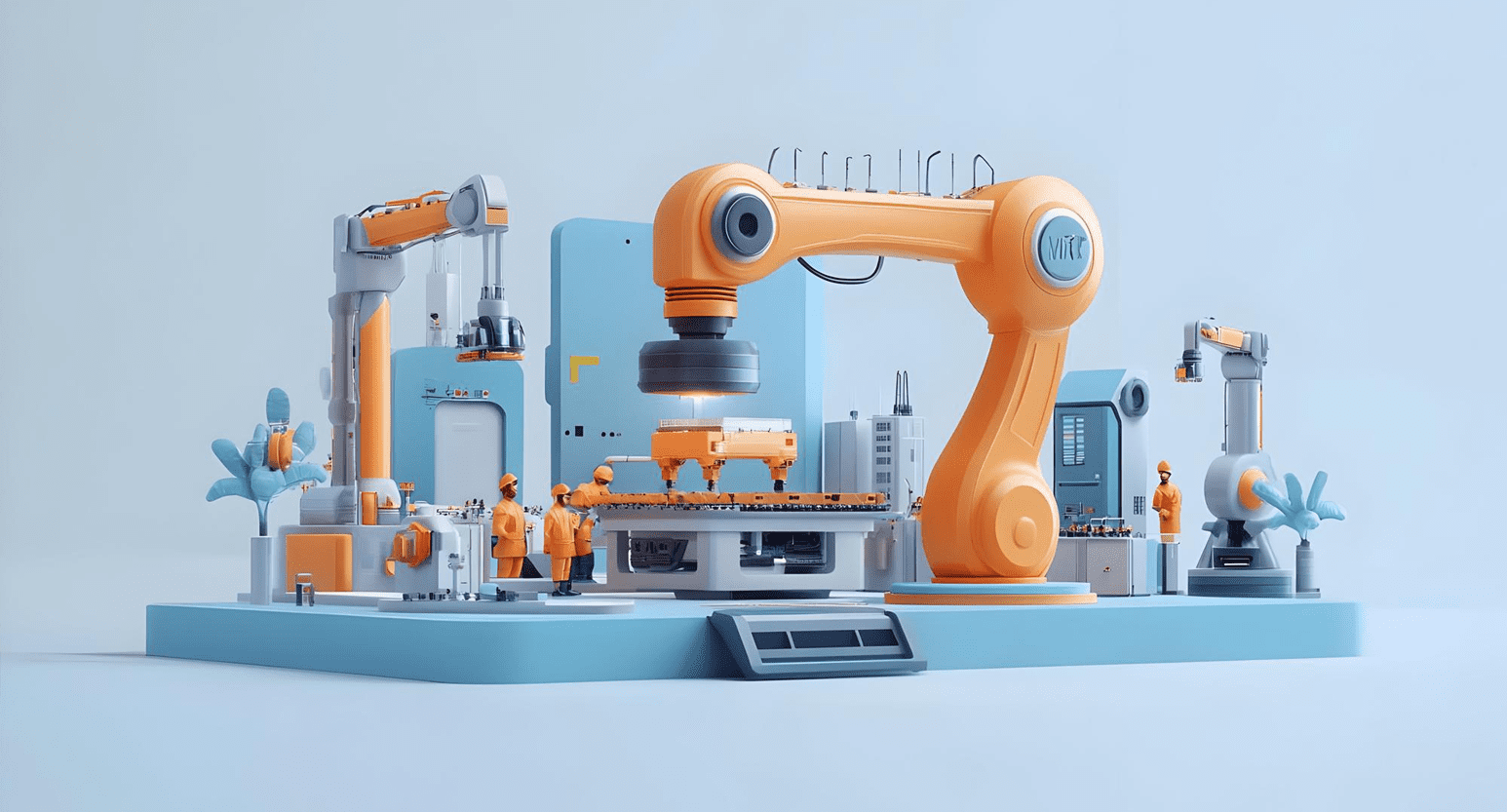
As AI takes over routine and operational tasks, the impact is clear in concrete results. GitHub Copilot now generates close to half of the code developers ship, with some Java developers seeing up to 61% of their code generated by the tool.
In telecommunications, AI-driven solutions reduce call center volumes by up to 30%, handle over 40% of customer queries through chatbots, and improve network reliability by detecting faults up to 50% faster. Financial institutions have reorganized entire operational units around generative AI workflows. The change is structural, and, as Karyna argues, it is also cultural.
“If you believe your job is just a set of responsibilities, you’ve already lost it,” she says.
“Tools are evolving faster than job descriptions ever will. That means the only durable advantage any professional has left is the way they think.”
This distinction between responsibilities and thinking is where real transformation begins. AI is automating the familiar parts of work, namely, the repeatable and the comfortable parts. What remains in human hands is the interpretive, strategic layer: judgment, creativity, narrative, connection, curiosity. And it’s exactly this layer that modern organizations are now forced to evaluate, nurture, and measure.
Inside Companies, the Shift Is Already Operational
Karyna sees the impact of AI as something teams deal with every day. Developers often start their day reviewing code drafts prepared by AI. Analysts begin with insights surfaced by automated systems, helping them focus on interpretation rather than raw data collection. Project managers rely on tools that track dependencies, draft updates, and flag potential risks, though final decisions and prioritization remain in human hands.
This creates a new kind of work rhythm. People spend less time checking boxes and more time interpreting, deciding, and shaping direction. At CLARITY, this shift is reflected in the Product department, where AI assists with a wide variety of tasks, including these examples
- Synthesizing customer feedback by analyzing massive amounts of unstructured data, from support tickets and reviews to survey responses and call transcripts.
- Drafting detailed user personas and testing product hypotheses with AI-generated synthetic personas.
- Using AI agents to search and navigate product-related documents in the internal knowledge base in real time.
- Prototyping and wireframing new features with AI assistance.
- Keeping track of assigned action items and priorities injected from the meetings’ transcripts.
“You notice that your real contribution is in the decisions you make, not the tasks you complete. All of this has one purpose: creating more room for the work that actually requires human judgment,” Karyna says.
Compliance vs Contribution Mindsets
Karyna warns that the greatest risk in today’s work is not AI replacing jobs but reducing your role to a checklist, a tendency many professionals overlook.
Some still approach work as a list of duties. Others look at business goals and ask how they can move things forward. AI amplifies the second group and quietly exposes the first.
Karyna draws a sharp line between what she calls the compliance mindset and the contribution mindset. The first asks, Is this in my job description? The second asks, What is the biggest problem I can solve?
She sees this mindset everywhere:
- People who freeze when a task changes versus people who adjust.
- People who wait for instructions versus people who bring options.
- People who protect old workflows versus people who redesign them.
Individual contributors, she argues, have just as much responsibility to evolve. This is how they can transform the way we view our work: from delivering a monthly report to providing leadership with insights for timely decisions; from identifying problems to owning the solutions.
So, the challenge isn’t the technology itself because AI doesn’t punish, reward, or judge. It quietly makes the differences in mindset visible.
For professionals, this is a challenge and an opportunity. AI makes operational work invisible and fast. It exposes who adds value beyond tasks and who merely executes them. Those who embrace the change, rethink contribution, and elevate outcomes become indispensable. Those who do not are left behind, and not because of AI, but because they misread what their job has become.
What Leaders Need to Protect
For leaders, adapting to the AI-driven workplace goes beyond simply providing tools. Karyna stresses that the most successful leaders focus on three things: impact, context, and space to think. Teams perform best when they understand the value of their work, have access to the right AI-augmented systems, and can explore solutions without being consumed by operational overhead.
“Leaders have to protect time for reflection and problem-solving,” Karyna explains. “AI can handle the repetitive, but humans still need space to ask bigger questions, connect ideas, and make judgment calls that matter. If leaders ignore this, the best talent will leave.”
Providing AI alone doesn’t make a team better. Leaders still have to protect the time to think, encourage people to try new approaches, and notice the contributions that actually move things forward. In a world where AI handles the routine, leadership is less about control and more about helping people do what only humans can do: solve problems, make judgment calls, and connect the dots.
The Bottom Line
AI technologies won’t replace you, but they can upgrade you if you let them. The uncomfortable truth is that many employees won’t. Some will cling to familiar workflows. Others will mistake activity for value. Many will continue treating work as transactional instead of transformational.
But the professionals who thrive will be the ones who accept that AI has already changed the nature of work. Not by taking jobs, but by demanding a different caliber of professional: more strategic, more curious, and to someone’s surprise – more human. In other words, the kind of professional who understands that the job description is no longer the point, yet the outcome is.