


The quickest way to get the RISE with SAP versus GROW with SAP decision wrong is to treat it as a feature comparison.
The two are not competing products you weigh on a spec sheet. They are SAP’s two commercial programmes for reaching SAP S/4HANA Cloud, each built for a different starting point, and in most cases your situation decides which one applies before any feature discussion begins.
An existing SAP customer modernising an established landscape is looking at RISE. An organisation new to SAP starting fresh on standard public cloud is looking at GROW. The interesting questions come after that, not before.
Find out what each programme is actually for, the profile of organisation each was designed around, and how to adopt SAP S/4HANA Cloud. If your question is narrower, whether to standardise on public cloud through SAP GROW or keep a customised build, that comparison is covered separately in GROW with SAP versus a custom S/4HANA build.
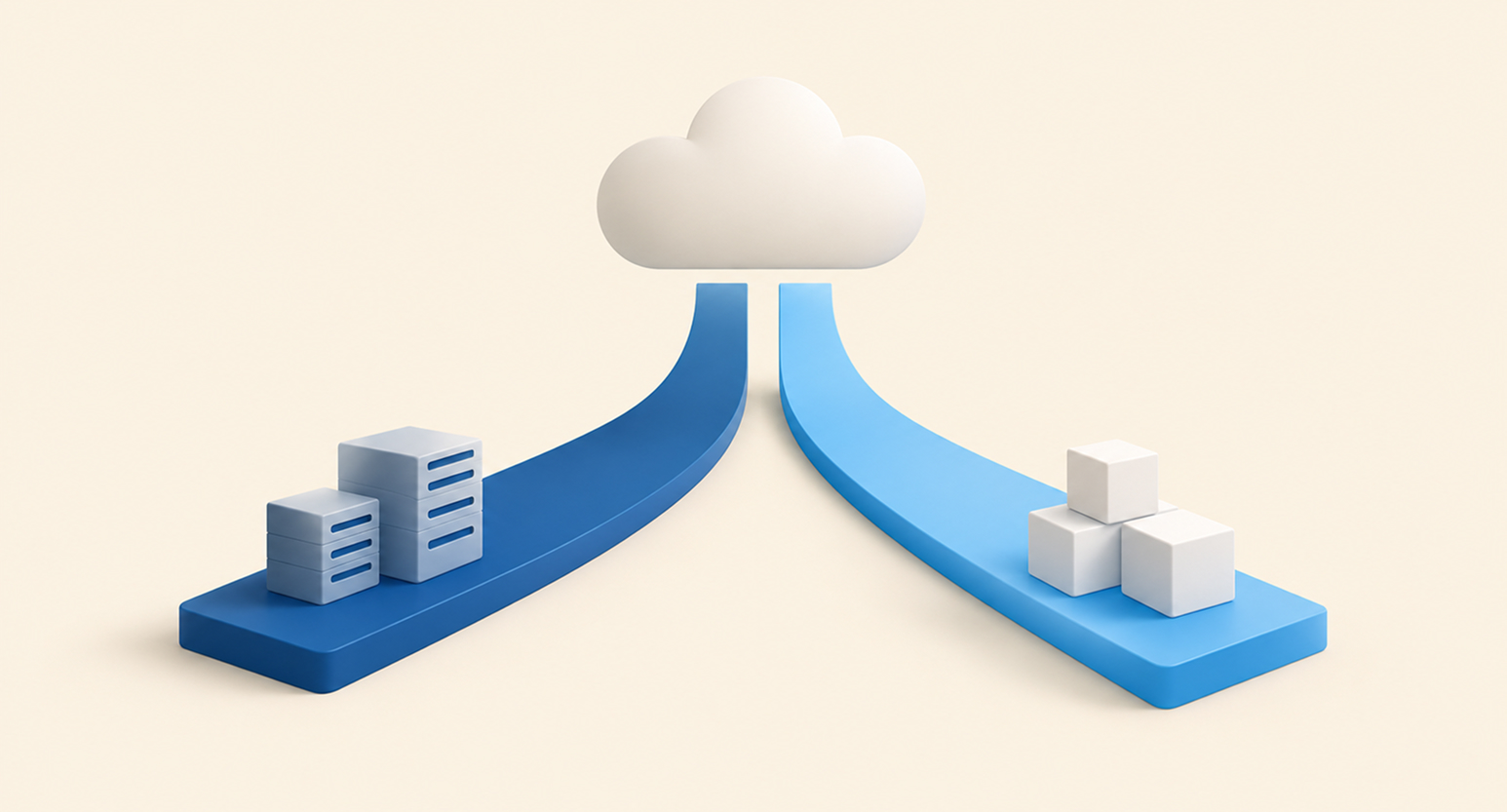
RISE and GROW are programmes not products
The single most useful thing to understand up front is that SAP RISE and GROW with SAP are support and commercial programmes rather than software. SAP positions them that way: RISE with SAP as a guided transformation journey for existing SAP ERP customers, and SAP GROW as the entry point to SAP Cloud ERP for companies new to SAP, both wrapped around the same underlying S/4HANA Cloud.
Each bundles the software with a methodology, tooling, migration or onboarding services, and expert guidance into a subscription that can expand over time: SAP GROW starts with SAP Cloud ERP packages for finance, supply chain and HR, and the RISE journey with the SAP Cloud ERP Private package. In both cases, further SAP Business Suite capabilities, AI, extensions and integration tools can be added as the business needs them.. The software core is shared, the same S/4HANA data model and foundation. What differs is the packaging, the deployment edition each defaults to, the functional, localisation and industry scope available in each edition, and the kind of journey each was built to support.
That distinction matters because it reframes the decision. You are not choosing between two versions of S/4HANA. You are choosing which structured path to the platform matches where you are starting from and how much of your existing landscape you are carrying forward.
It also explains why the two programmes have more in common than a surface comparison suggests. Both run on the SAP Activate methodology, both are managed through SAP Cloud ALM, and both now lean heavily on SAP Business AI and the Joule assistant.
The shared foundation means the skills, tooling and governance an organisation builds are not wasted if its footprint later spans both programmes, which is common in larger groups. The difference between RISE and GROW is the entry point and the edition each defaults to, not a fork into two incompatible worlds.

What RISE with SAP is for
RISE with SAP is the programme for existing SAP customers moving an established landscape onto S/4HANA Cloud. Its centre of gravity is SAP S/4HANA Cloud Private Edition, marketed as SAP Cloud ERP Private, the single-tenant edition that gives an organisation room to retain custom code, tailor processes and control the timing of upgrades. For a business that has spent years building SAP around the way it works, that flexibility is usually the point.
The programme is built to accommodate different migration routes. Private Edition can be implemented greenfield as a fresh start, brownfield as a system conversion that keeps existing configuration and data, or through selective data transition, which moves only the chosen data and processes. RISE supports all three.
That flexibility is what makes it the natural home for organisations preserving past investment rather than rebuilding from scratch. Regulated industries and businesses with complex, multi-country operations tend to sit here too, because the control over upgrade timing and the room for customisation are requirements rather than preferences.
SAP restructured RISE in 2025. It is no longer a set of fixed bundles but a modular framework: you subscribe to the SAP Cloud ERP Private package and add SAP Business Suite packages, tools, services and consumption-based components on top, wrapped in a standardised methodology and integrated toolchain.
The practical effect is more flexibility in what a customer actually pays for, alongside a more involved quoting process, since the package is assembled rather than picked off a shelf.

What GROW with SAP is for
GROW with SAP is the programme for organisations new to SAP that want a standardised public cloud ERP live quickly. It runs on SAP S/4HANA Cloud Public Edition, marketed as SAP Cloud ERP, the multi-tenant edition that SAP fully manages and keeps on the latest release. Where RISE is about modernising something that already exists, GROW is about starting clean on best-practice processes.
The defining characteristic is that GROW is always a greenfield implementation. There is no existing landscape to convert, so the project adopts SAP’s standard processes and configures within defined guard rails rather than modifying the core. It’s what makes GROW fast and keeps its total cost of ownership low, and it is also why an organisation with processes that cannot bend to the standard will find it limiting.
SAP has repositioned GROW with SAP as an AI-first entry point to SAP Cloud ERP aimed squarely at the midmarket, reinforcing its position as the route for net-new customers who value speed and standardisation over deep customisation.
Public cloud also means accepting SAP’s release cadence. The system updates on a fixed schedule that you adopt rather than defer, which is part of the trade for having SAP manage the platform end to end. For a new customer without legacy constraints, that is usually a fair exchange. For an organisation that needs to govern exactly when change lands, it is one of the reasons the decision points toward RISE instead.
The profile behind each choice
So where did they come from and how does that affect which one is best suited to your needs?
SAP RISE
RISE fits existing SAP customers with significant investment in their current landscape, organisations with complex or highly customised processes that carry genuine competitive value, and businesses in regulated sectors that need control over upgrade timing. The move off ECC is what drives most of this demand.
SAP set the end of mainstream maintenance for ECC at the end of 2027, with extended maintenance available to 2030 at a premium, and RISE is SAP’s primary vehicle for moving those customers onto S/4HANA. The migration has been a slow, multi-year shift rather than a rush: at the end of 2024, only around 39% of SAP’s roughly 35,000 ECC customers had licensed S/4HANA to begin the transition, which means most of the installed base still has this decision ahead of it, and RISE is the path SAP has built for them.
SAP GROW
GROW fits organisations new to SAP, particularly midsize and growing businesses, that want a fast, standardised cloud ERP and are willing to adopt best-practice processes rather than defend existing ones. Net-new entities, subsidiaries adopting a group template, and mid-market companies without heavy industry-specific requirements land here comfortably. The real qualifier is the willingness to standardise, more than company size.
The trap is choosing against your profile. An existing customer drawn to GROW’s speed and low cost can discover that a greenfield public cloud implementation leaves no room for the handful of processes the business cannot standardise. A new customer tempted toward RISE for the sense of control can end up paying for customisation capability it never uses. The honest starting point is almost always your existing relationship with SAP and the landscape you are carrying.
Where you’ve got to make the decision
For most organisations the starting point settles the programme, but two situations require judgement.
The first is the new customer with real complexity. GROW targets net-new names, but a large or highly regulated organisation starting fresh with SAP may still need the customisation and control that only Private Edition provides, which points to RISE despite the greenfield start. Being new to SAP does not automatically mean public cloud is the right fit; the deciding factor is how much your processes need to differ from the standard.
The second is the organisation running both. Larger groups frequently adopt a two-tier model: RISE and Private Edition at headquarters, where complex processes live, and GROW with Public Edition at subsidiaries or newly acquired entities, where speed and consistency matter more. The programmes are not mutually exclusive across an enterprise, and framing the decision as a single choice for the whole group is often the wrong frame. It can be answered per entity and per process area.
SAP provides a structured way to work through this. The Digital Discovery Assessment guides you through matching your requirements against the best-fit S/4HANA Cloud solution, and running it early turns an abstract argument about programmes into a concrete list of where your requirements meet the standard and where they do not.
Whichever way it points, the GROW with SAP path and the broader S/4HANA Public Cloud and private-edition options each have a clear place, and the assessment is the cleanest way to find which one is yours.
RISE with SAP or GROW with SAP
RISE with SAP and GROW with SAP are not rivals to be compared feature by feature. They are two doors to the same platform, one built for existing SAP customers modernising a landscape they want to keep shaping, the other for new customers starting clean on standard public cloud at speed.
For most organisations the right door is obvious once the decision is framed around starting point rather than features. Where it is not obvious, the questions that matter are how much your processes need to differ from the standard, how much control you need over upgrade timing, and how much of an existing landscape you are carrying forward. Answer those honestly, run the Digital Discovery Assessment, and the path tends to choose itself.
Related links